Wondering what some Yogic terms or Sanskrit words mean? I’ve put together a glossary of some of the more common words you may have heard and perhaps some words you haven’t heard.
- Agni: Digestive fire, force of transformation. Cultivating healthy agni is very important in Ayurveda.
- Asana: The third limb in Patanjali’s eight-limb path. Asana literally means seat. It is generally understood to refer to seated meditation postures in Patanjali’s Yoga Sutras, however in today’s Yoga it also refers to the physical practice. The accent is on the first syllable (AH-sana).
- Ashtanga: Ashta means eight and anga means limb, so ashtanga is the eight-limb path of Yoga as described in Patanjali’s Yoga Sutras. The eight limbs are Yamas, Niyamas, Asana, Pranayama, Pratyahara, Dharana, Dhyana and Samadhi. Pattabhi Jois also uses the word Ashtanga to refer to his style of vinyasa-based Yoga, however the word comes from the Yoga Sutras.
- Atma (also called atman): One’s true self. The eternal, unchanging, blissful part of each of us.
- Ayurveda: From ayur (life) and veda (knowledge), Ayurveda is the science of life, the sister science of Yoga. Ayurveda is thousands of years old and is a vast practice of health and healing. Ayurveda helps us live in accordance with nature.
- Chakra: Chakra translates as wheel. Chakras are energy centres. While there are numerous chakras in the body, most people are familiar with the seven major chakras that run along the spine, from root (base of spine) to crown. Chakra is pronounced with a “ch” sound, not a “sh” sound.
- Dharana: The sixth limb of Patanjali’s eight-limb path. Dharana means concentration. The mind is focused on an object of meditation and continually brought back each time it wanders. This is the precursor to meditation and is what many think of as meditation in the West.
- Dhyana: The seventh limb of Patanjali’s eight-limb path. Dhyana means meditation. At this stage, the mind is more effortlessly focused on the object of meditation. It can take years of regular practice to reach this stage.
- Dinacharya: An Ayurvedic principle meaning daily routine.
- Dosha: Ayurvedic constitution. There are three doshas and each is a combination of two elements. All of us have all three doshas, but in different concentrations. Your particular doshic make up will determine the optimal Ayurvedic practices for you.
- Karma: An action that generates a reaction. In Yogic philosophy, the reaction may be in a different lifetime.
- Kundalini: Kundalini translates to coiled snake. It is latent feminine energy (Shakti) said to be coiled at the base of the spine. Kundalini Yoga is a powerful form of Yoga involving chanting, dynamic breathwork and movement designed to awaken inner energy and elevate consciousness.
- Mantra: From the Sanskrit manas (mind) and trai (to protect or free from) or man (to think) and tra (tool). Mantra is a tool used by the mind to connect us with spiritual wisdom. Mantras can be chanted aloud or repeated silently in the mind. Mantras bring focus, strength and flexibility to the mind, similar to what asana does for the body.
- Meditation: See also dhyana. Meditation is a practice for training the mind. Many meditators are actually practicing dharana, or concentration, the precursor to meditation.
- Mindfulness: Mindfulness is really just presence, bringing one’s attention to the present moment. Yoga is a mindful practice – we bring awareness to the breath and the body, which keeps us present.
- Mudra: Mudra means gesture or seal. Typically, mudras are hand gestures, but there are other types of mudras as well. Mudras can enhance and direct the flow of prana and have different effects on the body and mind.
- Nadi: Nadis are energy channels. There are 72000 nadis in the human body. The three main nadis are the Ida (lunar, feminine), Pingala (solar, masculine) and Shushumna (the main energy channel).
- Nadi Shodhana: Alternate nostril breathing. This technique helps to optimize energy flow through the nadis and harmonize the left and right channels. It can also stimulate the parasympathetic nervous system, calm the mind and help prepare us for meditation. Also called anuloma viloma, although some consider nadi shodhana to include breath retention while anuloma viloma has no retention.
- Namaste: Namaste translates as I bow to you. It is a respectful greeting that essentially means the light in me honours the light in you.
- Niyamas: The second limb of Patanjali’s eight-limb path, the five niyamas are observances, principles of self-care, things to do for ourselves.
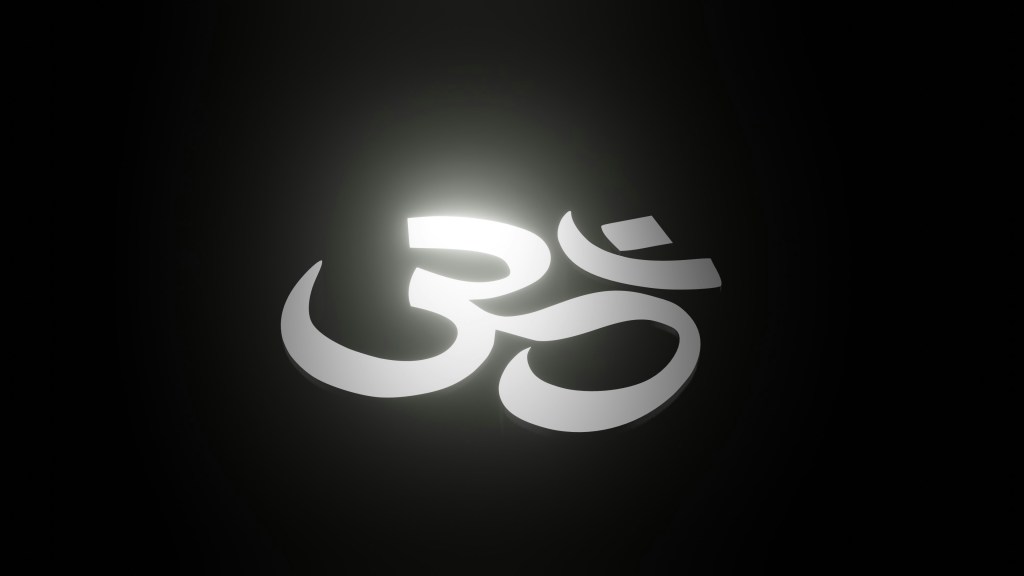
- Om (Aum): The primordial sound, the origin of all sounds, the universal vibration, the cosmic sound or the rhythmic vibration of all things. Om is said to be all vibrations, all sounds and all mantras. Om is chanted in three parts – aaahooohmmm. The vibration moves upward as we chant, from the belly to the throat. Om is found at the beginning and end of many longer mantras and can also be chanted on its own. The Om symbol is pictured above.
- Patanjali: Little is known about Patanjali, although it’s thought that he was a Yoga philosophy scholar who lived sometime between the 2nd century BCE and the 5th century CE. Patanjali is said to have compiled the Yoga Sutras rather than authored them.
- Prana: Lifeforce, vital energy.
- Pranayama: The fourth limb in Patanjali’s eight-limb path. Pranayama refers to breathing practices that allow us to regulate the breath and expand and harness lifeforce energy (prana).
- Pratyahara: The fifth limb in Patanjali’s eight-limb path. Pratyahara means withdrawal of the senses. Pratyahara is the bridge between the lower four limbs that have an external focus and the upper three limbs that have an internal focus. As the senses are drawn away from their sense objects, the focus begins to turn inward.
- Samadhi: The final step in Patanjali’s eight-limb path. Samadhi is meditative absorption, or spontaneous absorption in the object of meditation. It’s also said to be when the individual consciousness unites with the universal consciousness, or the connetion to the true self.
- Savasana (pronounced shavasana): Translates as corpse pose. This is the final relaxation posture in a Yoga practice and is a very important part of the class. Savasana is conscious relaxation and is rejuvenating for the body, mind and spirit. Refer to my Blog to learn more about Savasana.
- Surya Namaskar: Sun salutations, or salute to the sun. Traditional sun salutations are a series of 12 linked movements. Sun salutations provide physical, mental and energetic benefits. No more than 12 rounds should be performed at a time.
- Tadasana: Tada means mountain, asana means pose, so tadasana translates as mountain pose. This is a foundational standing pose in Yoga. Tadasana can help improve your posture and body awareness and is a preparatory pose for other standing poses. Ideally, ears, shoulders, hips and ankles should line up. Having feet hip width apart rather than together gives more stability and can also ease lower back tension.
- Yamas: The first limb of Patanjali’s Yoga Sutras, the five yamas are restraints, or how to behave toward others. They are essentially ethical directives, or the ethical foundation, guidelines for being a good human and living to our greatest potential.
- Yoga: Derived from the root word yuj, Yoga means to yoke or to unite. Yoga is thousands of years old and is essentially an energy management system. There are four traditional paths of Yoga and several lineages and styles. Yoga is not exercise, it is a practice that affects mind, body and spirit.
- Yoga Sutras: A collection of aphorisms on the theory and practice of Yoga compiled by Patanjali. There are 196 sutras divided into four chapters, or padas. The Yoga Sutras of Patanajli is considered one of the foundational texts on Yoga philosophy.
 kpoweryoga | in person, on-demand and livestream yoga | Edmonton, AB, Canada